Glaucoma Testing & Management
Glaucoma can develop gradually, often without noticeable symptoms in its early stages. At Coquitlam Centre Eye Care, we provide comprehensive glaucoma evaluations, advanced diagnostic testing and ongoing monitoring to help identify changes in your eye health and protect your long-term vision.
What is Glaucoma?
What is Glaucoma?
Glaucoma refers to a group of eye conditions that damage the optic nerve, which carries visual information from your eyes to your brain. This damage can lead to permanent vision loss if the condition is not identified and appropriately managed.
Although glaucoma is often associated with increased pressure inside the eye, it can also develop in people whose eye pressure falls within the normal range. Because the condition frequently progresses without obvious symptoms, especially in its early stages, many people may be unaware that their vision is at risk.
Glaucoma-related vision loss cannot typically be reversed. However, early diagnosis, appropriate treatment and ongoing monitoring can help slow or prevent further damage.
At Coquitlam Centre Eye Care, our doctors use comprehensive examinations and advanced diagnostic testing to assess glaucoma risk, investigate suspicious findings and determine when additional care or specialist involvement may be necessary.
KNOW YOUR RISK FACTORS
Who is at Risk of Developing Glaucoma?
Glaucoma can affect anyone, but certain factors may increase the likelihood of developing the condition. Understanding these risk factors can help you and your optometrist determine when closer monitoring or additional testing may be appropriate.
Increasing Age
The risk of glaucoma generally increases as we get older, making regular eye examinations particularly important for older adults.
Family History
Having a parent, sibling or other close relative with glaucoma can increase your risk of developing the condition.
Elevated Eye Pressure
Higher-than-normal intraocular pressure is an important risk factor, although glaucoma can also occur without elevated pressure.

Medical & Eye Health History
Certain medical conditions, previous eye injuries, significant nearsightedness and prolonged corticosteroid use may increase glaucoma risk.

Early Detection Matters
Glaucoma Doesn't Always Come With Warning Signs
One of the challenges of glaucoma is that its most common form can develop slowly, without pain or noticeable changes in vision during the early stages.
Over time, glaucoma may affect peripheral vision, making it more difficult to notice objects outside your direct line of sight. Because these changes can occur gradually, they may go unnoticed until significant damage has already developed.
This is why comprehensive eye examinations and appropriate diagnostic testing are so important, particularly for patients with known risk factors.
Symptoms That Require Immediate Attention
A less common form of glaucoma, acute angle-closure glaucoma, can cause sudden symptoms such as:
- Severe eye pain or headache
- Sudden blurred vision
- Redness of the eye
- Halos around lights
- Nausea or vomiting associated with eye pain
Sudden, severe symptoms require immediate emergency medical attention. Do not wait for a routine eye appointment.
For the design, I'd keep the first two paragraphs as a full-width text block, then place the emergency symptoms in a distinct, clearly separated section.
A Closer Look At Your Eye Health
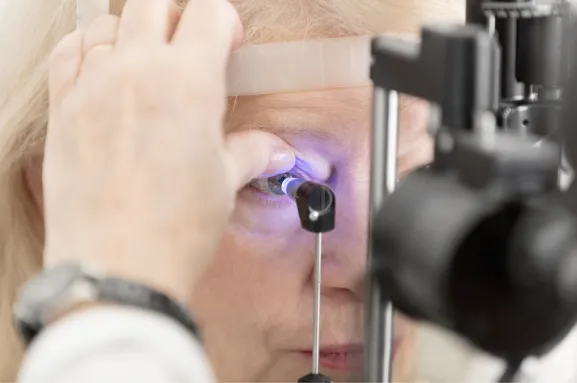
Glaucoma cannot be reliably diagnosed through a standard vision chart or eye pressure reading alone. A thorough evaluation may involve several different tests to assess the optic nerve, measure eye pressure and look for changes in visual function.
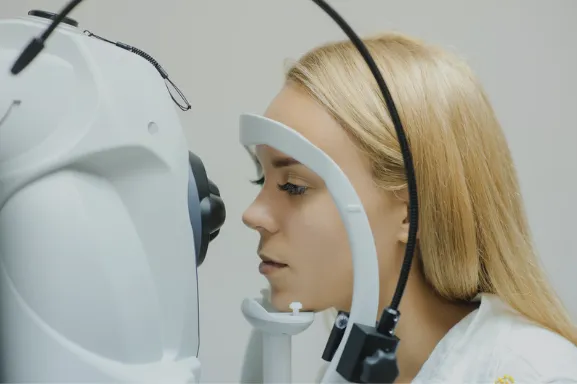
At Coquitlam Centre Eye Care, we offer advanced glaucoma testing, including Optical Coherence Tomography (OCT) and full visual field analysis. These technologies provide valuable information that can help our doctors investigate potential signs of glaucoma and monitor changes over time.
OCT Imaging
Optical Coherence Tomography (OCT) uses light-based imaging to produce detailed cross-sectional images of structures within the eye. In glaucoma assessments, it can help evaluate the optic nerve and retinal nerve fibre layer for changes associated with glaucoma.
OCT scans can also provide useful baseline measurements for comparison during future examinations.
Visual Field Testing
Visual field testing measures your ability to detect objects and lights in different areas of your field of vision, including your peripheral vision.
This testing can help identify patterns of vision loss associated with glaucoma and monitor whether changes are occurring over time.
Protect Your Vision With Proactive Eye Care
Whether you have a family history of glaucoma, have been advised to undergo additional testing or simply want to stay on top of your eye health, our team is here to help.
Prefer to call? (604) 468-8600
Open 7 days a week at Coquitlam Centre
Find Us
Coquitlam Centre Eye Care
2929 Barnet Hwy
Unit 2500, Coquitlam, BC.
V3B 5R5
Phone: 604-468-8600
© 2026 | Coquitlam Centre Eye Care | All Rights Reserved.