
Cataract Assessment & Care
Changes in your vision can make everyday activities more challenging, but understanding what's causing them is the first step toward finding the right care. At Coquitlam Centre Eye Care, we provide comprehensive cataract assessments, ongoing eye health monitoring, and referrals to ophthalmology specialists when additional treatment is needed.
What are Cataracts?
What are Cataracts?
A cataract develops when the normally clear natural lens inside your eye becomes cloudy. This clouding can interfere with the way light passes through the eye, causing vision to become blurry, hazy, or less vibrant over time.
Cataracts are a common part of aging, although they can also develop earlier due to factors such as eye injuries, certain medical conditions, or prolonged use of some medications. They typically develop gradually, which means changes in vision may be difficult to notice at first.
As cataracts progress, everyday activities such as reading, driving at night, or recognizing faces may become more difficult. Some people also notice increased sensitivity to bright lights, glare from headlights, or changes in how they perceive colours.
At Coquitlam Centre Eye Care, our doctors can evaluate changes in your vision, examine the health of your eyes, and help determine whether cataracts may be contributing to your symptoms.
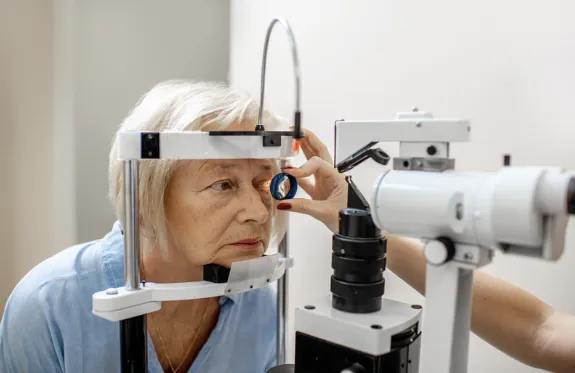
recognizing vision changes
Signs You May Be Developing Cataracts
Cataracts often develop slowly, and their symptoms can vary depending on how much of the natural lens has become cloudy. While early cataracts may cause little noticeable change, more advanced cataracts can interfere with everyday vision.
Blurry or Cloudy Vision
Your vision may appear hazy, foggy, or less sharp, even when wearing your usual glasses.
Increased Glare & Light Sensitivity
Bright sunlight, headlights, and indoor lighting may become uncomfortable or distracting.
Difficulty Seeing at Night
Reduced contrast and increased glare may make driving or navigating in low-light conditions more challenging.
Frequent Prescription Changes
You may notice that your glasses prescription changes more frequently as your vision is affected.
Faded or Yellowed Colours
Colours may appear less vibrant or take on a slightly yellow or brownish tint.
Halos Around Lights
Lights may appear to have rings or halos around them, particularly at night.

How Are Cataracts Diagnosed?
Cataracts are typically identified during a comprehensive eye examination. Your optometrist can examine the natural lens inside your eye to determine whether clouding is present and assess how it may be affecting your vision.
At Coquitlam Centre Eye Care, our doctors take a comprehensive approach to evaluating changes in your eyesight. An examination may include measuring your visual acuity, reviewing your prescription, examining the internal structures of your eyes, and assessing your overall eye health.
Because blurry vision and other visual changes can have several possible causes, a thorough examination is important for determining whether cataracts are responsible or whether another eye condition may be contributing to your symptoms.
What Your Examination May Include:
Visual Acuity Testing
Evaluating how clearly you can see at different distances and whether your vision has changed since your previous examination.
Slit-Lamp Examination
Using a specialized microscope to examine the structures at the front of the eye, including the natural lens, for signs of cataract development.
Prescription Assessment
Determining whether changes to your glasses prescription may improve your vision and comfort.
Overall Eye Health Evaluation
Assessing other aspects of your eye health to identify additional conditions that may influence your vision or treatment recommendations.
Understanding Your Treatment Options
Not every cataract requires immediate surgery. In the earlier stages, changes in vision may be manageable through updated glasses prescriptions, improved lighting, or adjustments to everyday activities.
As cataracts progress, however, these measures may become less effective. When clouding of the natural lens begins to significantly interfere with daily activities or prevents adequate assessment or treatment of other eye conditions, cataract surgery may be recommended.
Cataract surgery involves removing the cloudy natural lens and replacing it with an artificial intraocular lens. It is performed by an ophthalmologist and is generally considered a safe and effective procedure, although, like any surgery, it carries potential risks.
At Coquitlam Centre Eye Care, our doctors can help assess how cataracts are affecting your vision, monitor changes over time, and determine when a referral to an ophthalmology specialist may be appropriate.

When Might Cataract Surgery Be Considered?
The decision to proceed with cataract surgery depends on several factors, including the severity of the cataract, your visual needs, and how much your symptoms interfere with daily life.
For some patients, difficulty driving at night or reading comfortably may become a significant concern. Others may find that their vision is no longer adequately improved by updated glasses.
Your optometrist can discuss your examination findings and help you understand when a surgical consultation may be beneficial.
Don't Let Changes in Your Vision Go Unchecked
If you've noticed blurry vision, increased glare, or difficulty seeing clearly, a comprehensive eye examination can help determine what's causing these changes.
Our team at Coquitlam Centre Eye Care is here to provide personalized assessments and help you understand your eye care options.
Prefer to call? (604) 468-8600
Open 7 days a week at Coquitlam Centre
Find Us
Coquitlam Centre Eye Care
2929 Barnet Hwy
Unit 2500, Coquitlam, BC.
V3B 5R5
Phone: 604-468-8600
© 2026 | Coquitlam Centre Eye Care | All Rights Reserved.